






The power grid is one of the most critical infrastructures supporting modern society. From lighting homes and powering factories to enabling digital services and transportation systems, the grid operates silently in the background, delivering electricity whenever and wherever it is needed. However, traditional power grids were designed decades ago for one-way energy flow, limited visibility, and manual operation. As energy demand grows, renewable energy penetration increases, and reliability requirements become stricter, these legacy grids face mounting challenges.
This is where the Internet of Things (IoT) plays a transformative role. By embedding sensors, communication networks, and intelligent analytics into grid assets, IoT enables the evolution from a conventional power grid to a smart, connected, and data-driven system.
This article explains what the power grid is, how it works, the challenges it faces today, and—most importantly—how IoT empowers the power grid to become smarter, safer, and more efficient.
Índice
What Is the Power Grid?
The power grid is a complex, interconnected network that generates, transmits, distributes, and delivers electricity from producers to consumers. It consists of physical infrastructure, control systems, and operational processes working together in real time.
At a high level, the power grid includes four main layers:
Generación de energía
Electricity is generated at power plants using various energy sources, including coal, natural gas, nuclear, hydropower, wind, and solar. Traditionally, generation was centralized, with large plants supplying electricity to vast regions. Today, distributed energy resources such as rooftop solar and small wind turbines are becoming increasingly common.
Power Transmission
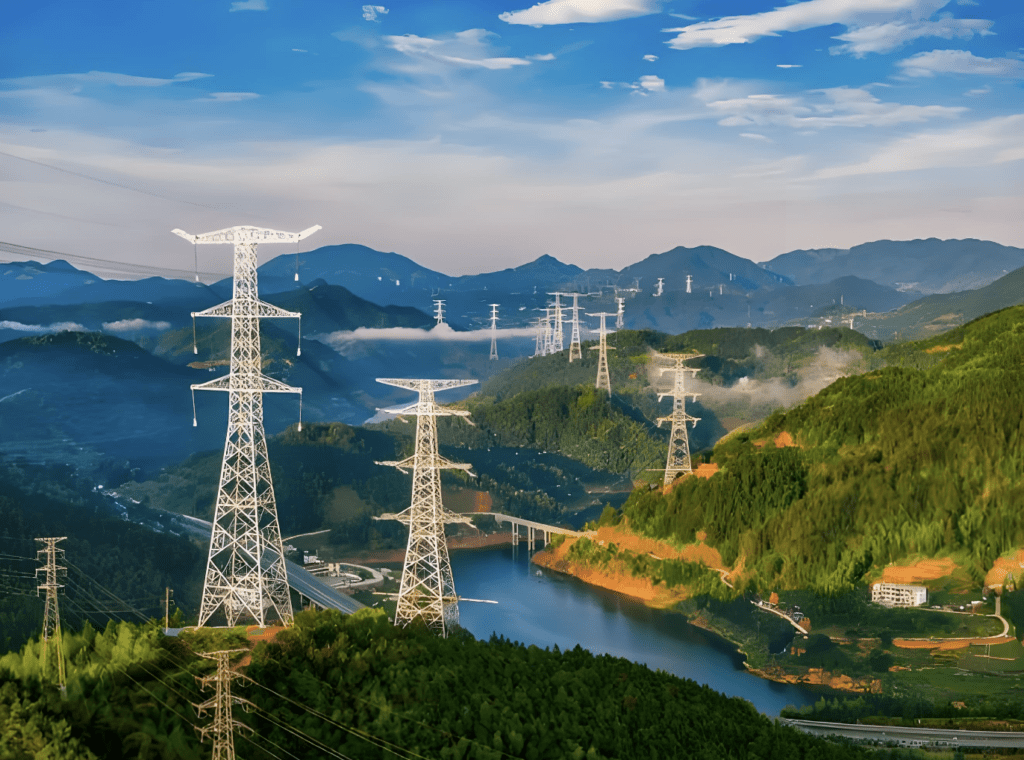
High-voltage transmission lines carry electricity over long distances from power plants to substations. These lines minimize energy loss and form the backbone of the power grid, often spanning hundreds or thousands of kilometers.
Power Distribution
Distribution networks step down voltage and deliver electricity from substations to end users, including residential, commercial, and industrial consumers. Distribution systems are typically more complex and geographically dense than transmission networks.
Consumo de energía
End users consume electricity through appliances, machinery, charging stations, and digital devices. Consumption patterns vary by time, location, and user behavior, making demand forecasting a critical task for grid operators.
Together, these layers form a highly synchronized system that must maintain balance between electricity supply and demand at all times.
Challenges Facing the Traditional Power Grid
Despite its importance, the traditional power grid faces several structural and operational challenges:
Visibilidad limitada
Conventional grids rely on sparse monitoring points and manual inspections. Grid operators often lack real-time visibility into asset health, line conditions, and load variations, especially in remote areas.
Aging Infrastructure
Many power grid assets, such as transmission lines, transformers, and substations, are decades old. Aging equipment increases the risk of failures, outages, and safety incidents.
Rising Energy Demand
Urbanization, electrification of transportation, and digitalization continue to push electricity demand higher. Peak loads place significant stress on grid infrastructure.
Integration of Renewable Energy
Renewable energy sources are intermittent and decentralized. Their integration introduces volatility and complexity that traditional grid architectures were not designed to handle.
High Operation and Maintenance Costs
Manual inspections, reactive maintenance, and unplanned outages result in high operational costs and inefficient resource allocation.
To address these challenges, the power grid must become more intelligent, adaptive, and data-driven—and this is precisely where IoT empowers the power grid.
What Is IoT in the Power Grid?
The Internet of Things refers to a network of connected devices that collect, transmit, and analyze data. In the context of the power grid, IoT connects physical grid assets—such as towers, transformers, switches, meters, and substations—to digital platforms through sensors and communication networks.
An IoT-enabled power grid typically includes:
- Sensors to monitor electrical, mechanical, and environmental parameters
- Communication technologies such as 5G, 4G, LPWAN, and fiber
- Edge computing devices for local data processing
- Centralized or cloud-based platforms for analytics and visualization
- Intelligent applications for decision-making and automation
By turning physical assets into data sources, IoT empowers the power grid with real-time awareness and intelligence.
How IoT Empowers the Power Grid
Real-Time Monitoring and Visibility
One of the most fundamental ways IoT empowers the power grid is through real-time monitoring. Sensors installed on transmission lines, distribution poles, substations, and transformers continuously collect data such as:
- Tensión y corriente
- Temperature and humidity
- Vibration and tilt
- Line sag and conductor clearance
- Equipment status and fault indicators
This data is transmitted to monitoring platforms in real time, giving operators unprecedented visibility into grid conditions. As a result, issues that once took hours or days to detect can now be identified within seconds.
Predictive Maintenance and Asset Health Management
Traditional grid maintenance follows either fixed schedules or reactive approaches. Both methods are inefficient and costly. IoT enables predictive maintenance by continuously analyzing asset condition data.
For example, abnormal temperature rise in a transformer or increasing vibration on a transmission tower can indicate early-stage faults. By identifying these patterns in advance, utilities can schedule maintenance proactively, extend asset lifespan, and reduce unplanned outages.
This data-driven approach significantly lowers operation and maintenance costs while improving reliability.
Enhanced Grid Reliability and Fault Response
When faults occur, speed is critical. IoT empowers the power grid with faster fault detection, localization, and isolation.
Smart sensors and intelligent gateways can detect anomalies such as short circuits, line breaks, or insulation failures. Combined with automated control systems, the grid can isolate faulty sections and restore power to unaffected areas within minutes.
This capability reduces outage duration, minimizes economic losses, and improves customer satisfaction.
Integration of Renewable Energy and Distributed Resources
As renewable energy adoption accelerates, the power grid must manage bidirectional energy flows and fluctuating generation. IoT provides the data foundation required to balance supply and demand dynamically.
By monitoring generation output, weather conditions, and consumption patterns in real time, IoT systems help operators forecast variability and adjust grid operations accordingly. This makes it possible to integrate more renewable energy without compromising grid stability.
Intelligent Load Management and Demand Response
IoT enables fine-grained visibility into electricity consumption across regions, industries, and even individual devices. With this insight, utilities can implement intelligent load management and demand response strategies.
During peak demand periods, IoT-based systems can automatically adjust loads, send signals to smart devices, or incentivize consumers to shift usage. This helps reduce peak stress on the grid and defer costly infrastructure upgrades.
Improved Safety and Risk Management
Power grid operations involve significant safety risks, especially in harsh environments. IoT sensors can monitor environmental factors such as wind speed, icing, flooding, and ground movement.
For transmission towers and distribution poles, tilt and displacement monitoring provides early warning of structural instability. These insights allow operators to take preventive action, protecting both personnel and infrastructure.
Toma de decisiones basada en datos
By aggregating data from across the power grid, IoT platforms enable advanced analytics and visualization. Operators gain a holistic view of grid performance and can make informed decisions based on real data rather than assumptions.
Over time, historical data supports long-term planning, capacity expansion, and investment optimization.
IoT Architecture for the Power Grid
An effective IoT-enabled power grid follows a layered architecture:
Device Layer
This layer includes sensors, meters, and intelligent electronic devices deployed on grid assets. These devices collect raw data from the physical environment.
Capa de borde
Edge gateways aggregate data from multiple devices, perform local processing, and ensure reliable communication. Edge computing reduces latency and bandwidth usage while improving system resilience.
Communication Layer
Reliable connectivity is essential. Depending on application requirements, it may use 5G, 4G, private LTE, LPWAN, fiber optics, or hybrid networks.
Plataforma
Centralized platforms handle data storage, analytics, visualization, and integration with existing systems such as SCADA and EMS.
Application Layer
This layer delivers specific use cases, including asset monitoring, predictive maintenance, fault management, and energy optimization.
Security Considerations in an IoT-Enabled Power Grid
As connectivity increases, cybersecurity becomes a top priority. IoT systems for the power grid must incorporate multi-layer security mechanisms, including device authentication, encrypted communication, access control, and continuous monitoring.
A secure design ensures that the benefits of IoT are realized without introducing unacceptable risks.
Future Trends: Toward a Fully Smart Power Grid
Looking ahead, IoT will continue to empower the power grid in combination with other technologies such as artificial intelligence, digital twins, and edge intelligence. AI-driven analytics will enhance fault prediction and system optimization by learning from massive volumes of real-time and historical data. Digital twins will enable virtual modeling and simulation of grid behavior, allowing utilities to test operational strategies, assess risks, and plan upgrades before changes are implemented in the physical network. Edge intelligence will support faster, autonomous decision-making at the field level, reducing latency and improving resilience in mission-critical scenarios.
Together, these innovations will transform the power grid into a self-aware, self-healing, and highly adaptive system. The future smart power grid will be capable of detecting abnormalities, predicting failures, and initiating corrective actions with minimal human intervention. As electrification accelerates and renewable energy penetration increases, an IoT-empowered power grid will play a central role in ensuring reliability, efficiency, and sustainability across the entire energy ecosystem.