


Tower Tilt Monitoring is no longer a niche engineering tool reserved for extreme environments. In the era of climate change, it is rapidly becoming a foundational capability for protecting critical infrastructure worldwide.
Over the past decade, climate patterns have shifted dramatically. Extreme rainfall, stronger typhoons, prolonged heatwaves, freeze–thaw cycles, and soil instability now occur with greater frequency and intensity. These changes directly affect the structural foundations of communication towers, transmission towers, railway catenary towers, and other vertical assets that underpin modern society.
As a result, tower failure is no longer driven only by aging or design flaws. Instead, it increasingly stems from environmental stress accumulation—a slow, often invisible process that manifests first as subtle structural tilt rather than sudden collapse. Recognizing and responding to this early signal has become critical.
This is why tower tilt monitoring is shifting from a “nice-to-have” option to an essential risk mitigation strategy for climate-resilient infrastructure.
Table des matières
- Climate Change Has Fundamentally Altered Tower Operating Conditions
- Why Structural Tilt Is the Earliest and Most Actionable Warning Signal
- Climate-Driven Risk Scenarios That Increase Tower Tilt Probability
- Towers Are No Longer Low-Value Passive Structures
- Regulatory and Liability Pressure Is Rising
- Tower Tilt Monitoring as Part of Modern Infrastructure Intelligence
- Real Operational Value: Beyond Disaster Prevention
- Climate Adaptation Requires Smarter Infrastructure, Not Just Stronger Structures
- Looking Ahead: From Monitoring to Intelligent Risk Management
- Conclusion: Tilt Monitoring Is No Longer Optional in a Changing Climate
Climate Change Has Fundamentally Altered Tower Operating Conditions
Traditional tower design standards were based on historical climate data. However, climate change has invalidated many of these assumptions.
Extreme weather is no longer exceptional
Across regions, infrastructure operators now face:
- More frequent intense rainfall and flooding
- Stronger and less predictable typhoons and windstorms
- Extended heatwaves causing soil dehydration
- Increased freeze–thaw cycles in high-latitude and mountainous areas
These conditions do not necessarily destroy towers overnight. Instead, they gradually undermine foundation stability.
Towers experience cumulative environmental stress
Unlike mechanical failures, climate-driven risks accumulate silently:
- Soil softening reduces bearing capacity
- Erosion creates uneven settlement
- Repeated wind loads introduce asymmetric stress
- Thermal expansion and contraction fatigue structural joints
The outcome is often progressive tower tilt, not immediate collapse.
Why Structural Tilt Is the Earliest and Most Actionable Warning Signal
From an engineering perspective, tower tilt is one of the most valuable indicators of structural risk.
Tower failure follows a predictable path
In most real-world cases, the failure chain looks like this:
Environmental change → Foundation displacement → Micro-tilt → Stress redistribution → Structural fatigue → Instability
Tilt occurs early in this sequence, when corrective action is still feasible and cost-effective.
Tilt is measurable, trendable, and comparable
Unlike visual cracks or corrosion, tilt provides:
- Quantitative data
- Directional information
- Time-series trends
- Correlation with environmental events
This makes Structural Health Monitoring far more predictive than reactive inspections.
Climate-Driven Risk Scenarios That Increase Tower Tilt Probability
Different climate phenomena affect towers through different physical mechanisms.
Heavy rainfall and flooding
- Washout of soil around foundations
- Increased pore water pressure
- Sudden loss of soil shear strength
These conditions are especially dangerous for towers built on soft soil or slopes.
Typhoons and extreme winds
- Sustained lateral loading
- Loosening of guy wires
- Fatigue in anchoring systems
Repeated wind events can cause incremental tilt, even if each event remains below design limits.
Heatwaves and drought
High temperatures lead to:
- Soil shrinkage
- Differential settlement
- Reduced foundation friction
This is an emerging risk in regions previously considered stable.
Freeze–thaw cycles
In colder climates:
- Frozen soil expands
- Thawing creates voids
- Repeated cycles amplify displacement
Over time, micro-tilts accumulate into measurable deviation.
Towers Are No Longer Low-Value Passive Structures
The importance of towers has increased dramatically.
Towers underpin critical services
Modern towers support:
- Mobile communication networks
- High-voltage transmission lines
- Railway electrification systems
- Emergency and public safety networks
A single tower failure can cascade into:
- Network outages
- Power blackouts
- Transportation disruptions
- Public safety incidents
Climate risk amplifies asset exposure
As climate volatility rises, so does the financial and operational risk associated with tower instability. Consequently, operators must protect not just structures, but service continuity.
Regulatory and Liability Pressure Is Rising
Infrastructure governance is evolving.
From reactive maintenance to preventive accountability
Regulators increasingly expect:
- Documented risk assessment
- Continuous monitoring for critical assets
- Data-backed maintenance decisions
After climate-related incidents, authorities often ask not what happened, but what was known beforehand.
Monitoring data becomes legal and insurance evidence
Tilt monitoring records can:
- Demonstrate due diligence
- Support insurance claims
- Reduce liability exposure
- Improve regulatory compliance
In this context, Real-Time Tilt Monitoring Systems serve both technical and legal purposes.
Why Traditional Inspection Methods Are No Longer Sufficient
Manual inspection models struggle under climate pressure.
Inspection cycles are too slow
Climate damage often occurs:
- Immediately after storms
- During inaccessible conditions
- Between scheduled inspections
By the time inspectors arrive, damage may already be irreversible.
Human judgment lacks trend visibility
Visual checks cannot reliably detect:
- Millimeter-level displacement
- Directional tilt evolution
- Correlation with weather events
This creates blind spots in risk assessment.
Tower Tilt Monitoring as Part of Modern Infrastructure Intelligence
Today, tower tilt monitoring is not just about sensors—it is about systems.
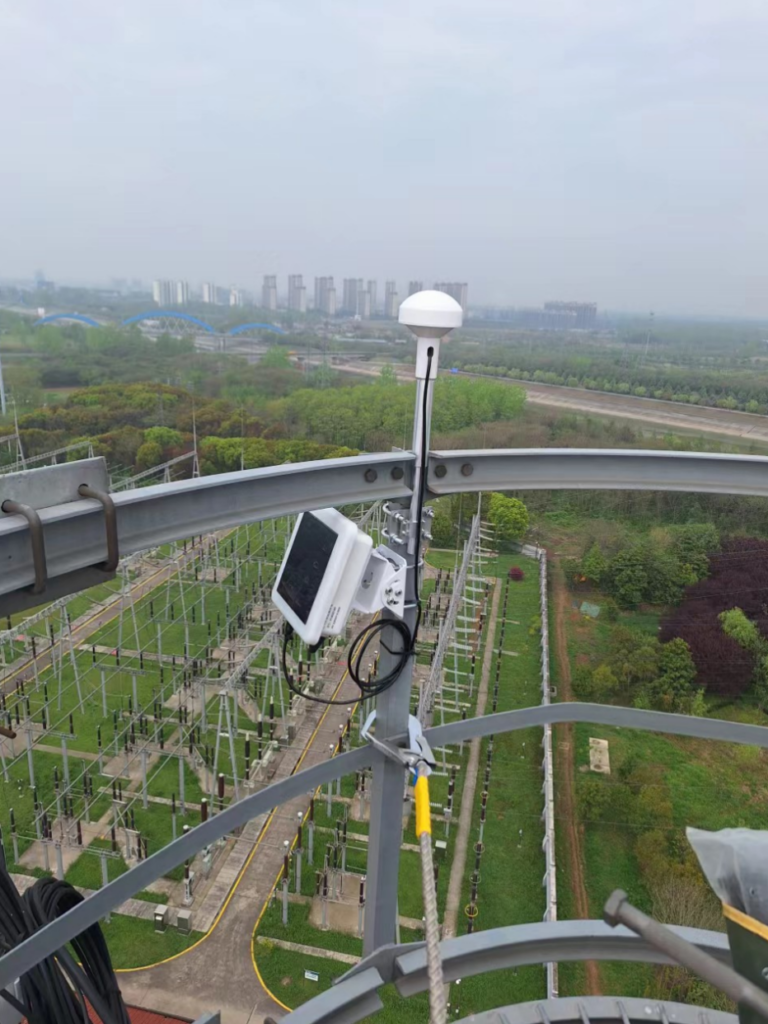
Core components of modern monitoring
A robust system typically includes:
- High-precision tilt sensors
- Edge data processing
- Secure communication networks
- Alarm logic and trend analysis
- Integration with climate and geotechnical data
From thresholds to predictive insight
Instead of simple alarms, advanced systems enable:
- Rate-of-change analysis
- Multi-parameter correlation
- Early-stage anomaly detection
This is where Climate-Resilient Infrastructure begins to take shape.
Real Operational Value: Beyond Disaster Prevention
The benefits of tower tilt monitoring extend well beyond safety.
Optimized maintenance strategies
Continuous data allows operators to:
- Prioritize high-risk sites
- Reduce unnecessary inspections
- Allocate resources more efficiently
Lower lifecycle costs
Early intervention costs far less than:
- Emergency repairs
- Tower replacement
- Service disruption penalties
Improved network reliability
Stable towers mean:
- Fewer outages
- Higher service availability
- Greater public trust
Climate Adaptation Requires Smarter Infrastructure, Not Just Stronger Structures
The future of infrastructure resilience lies in adaptation, not brute strength.
Instead of over-engineering every tower, operators need systems that can:
- Sense environmental change
- Interpret structural response
- Trigger timely intervention
In this paradigm, tower tilt monitoring acts as the sensory layer of climate-adaptive infrastructure.
Looking Ahead: From Monitoring to Intelligent Risk Management
As climate uncertainty becomes the norm, infrastructure must evolve from passive assets into responsive systems.
Tower tilt monitoring will increasingly integrate with:
- Meteorological forecasting
- Soil condition analysis
- Digital twin models
- Predictive maintenance platforms
Together, these capabilities will transform how operators manage risk under climate stress.
Conclusion: Tilt Monitoring Is No Longer Optional in a Changing Climate
Climate change has altered the rules of infrastructure management. Towers now operate in environments defined by uncertainty, variability, and cumulative stress.
Tower Tilt Monitoring provides one of the earliest, clearest, and most actionable signals of structural risk. It allows operators to move from reactive repair to proactive resilience.
In the age of climate volatility, towers can no longer remain silent structures.
They must become self-reporting assets—capable of signaling danger before failure occurs.
That transformation begins with continuous, intelligent tilt monitoring.