






In today’s era of smart grids and intelligent infrastructure, the way we monitor transmission towers and utility poles is rapidly evolving. Traditional tower monitoring methods—based on manual inspections and periodic measurements—were once sufficient when network loads were stable and environmental risks were predictable.
However, modern transmission and communication networks have become far more complex. Towers now host not only power lines but also 5G antennas, IoT nodes, surveillance cameras, and environmental sensors. The increased load, coupled with unpredictable weather events and ground shifts, demands a shift toward real-time, data-driven monitoring.
In this context, Smart Tower Monitoring solution powered by high precision positioning, IoT sensors, and AI analytics are replacing outdated manual approaches. The limitations of traditional tower monitoring methods are no longer compatible with the needs of modern urban management, smart grids, and predictive maintenance systems.
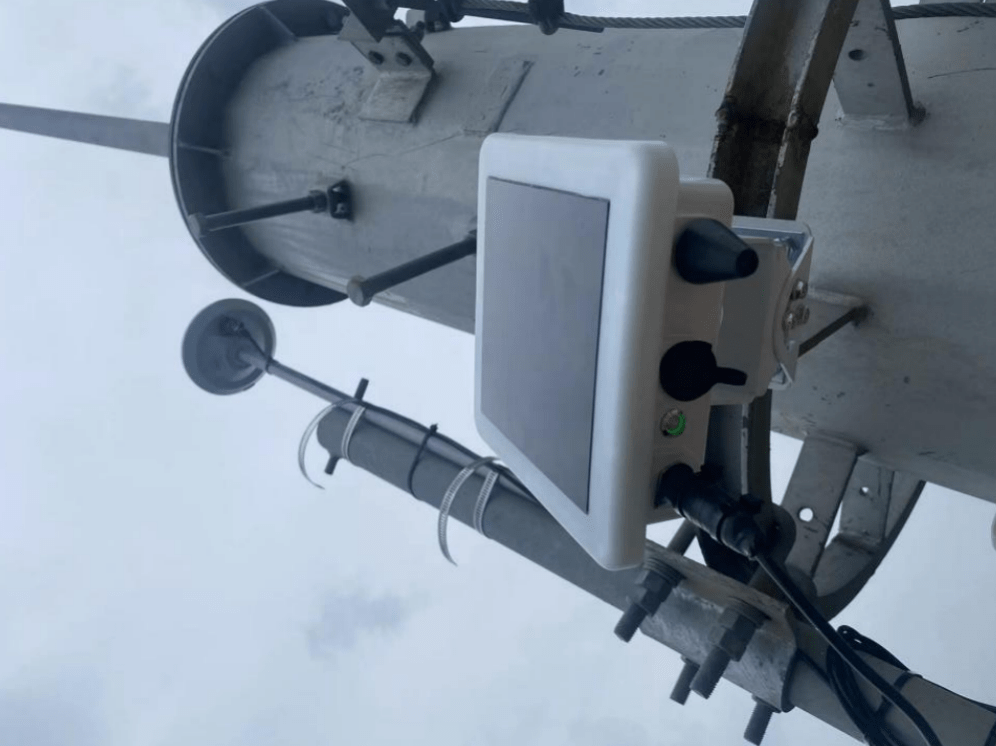
Table of contents
Limitations of Traditional Tower Monitoring Methods
Low Frequency and Blind Spots: The Problem of Intermittent Detection
Traditional monitoring relies heavily on manual inspections or scheduled field measurements, such as using theodolites, inclinometers, or visual checks. These inspections often occur on a weekly, monthly, or even seasonal basis.
But risks don’t follow schedules. Events like windstorms, soil subsidence, vehicle collisions, or nearby construction disturbances can destabilize structures between two inspection intervals. This intermittent detection creates blind spots in safety management, leading to delayed responses and missed early warnings.
In a time when asset management increasingly depends on real-time insights, such passive monitoring can no longer ensure proactive risk control.
Insufficient Precision and Sensitivity
Early structural damage—such as minor ground settlement, micro-cracks, or gradual tilting—is often invisible to the naked eye or undetectable by low-precision instruments.
Without continuous, high-resolution data, traditional monitoring cannot capture these subtle trends. Over time, these micro-movements can accumulate, eventually resulting in serious failures or collapses.
Moreover, the lack of historical trend data prevents maintenance teams from performing predictive maintenance or applying AI models for early warnings. As a result, responses remain reactive instead of preventive.
High Safety Risks and Labor Costs
Manual inspections of transmission towers or high-voltage poles expose workers to significant safety risks—including electric shocks, falls, and mechanical injuries.
These inspections also require strict safety measures and sometimes temporary power outages, which affect grid continuity.
Furthermore, when scaled across thousands of tower sites, human-based monitoring becomes cost-prohibitive, especially for utilities with vast regional coverage. As urban and rural networks expand, the financial and logistical burden of manual inspections only grows.
Environmental and Extreme Weather Challenges
The effects of climate change—such as increased frequency of strong winds, floods, freezing rain, or earthquakes—have made sudden structural failures more common.
Traditional, periodic inspections are inadequate in these scenarios. If a tower experiences damage during a storm and is not immediately rechecked, latent risks may remain unnoticed until the next scheduled visit.
In remote or mountainous areas, adverse weather often prevents timely human access, creating further delays. This is where online structural health monitoring (SHM) becomes crucial.
Data Silos and Lack of Historical Trend Analysis
Traditional monitoring records often exist as isolated spreadsheets or paper documents, lacking continuity and integration.
Without time-series data, it’s impossible to perform statistical trend analysis or feed data into machine learning models. As a result, operators cannot establish predictive maintenance frameworks or calculate the remaining service life of assets.
In essence, the traditional model leads to data fragmentation, preventing utilities from transitioning from reactive maintenance to predictive, AI-assisted asset management.
Rising Operational Complexity
Modern towers are no longer simple steel structures. They carry additional components such as 5G antennas, optical fiber lines, and IoT devices, leading to increased mechanical load and wind pressure.
Traditional monitoring techniques rely on static design conditions rather than real-time operating conditions. Without continuous measurements, they fail to reflect the true stress distribution and vibration characteristics of a tower under evolving loads.
Thus, real-time intelligent monitoring is essential to ensure operational safety in increasingly interconnected tower ecosystems.
Regulatory and Compliance Requirements
In many countries, regulatory bodies and utility authorities are tightening requirements for traceable safety records, risk assessment, and emergency response documentation.
Paper-based logs or manual entries cannot meet modern auditability and traceability standards. In the event of an incident, the absence of timestamped data makes it difficult to reconstruct failure timelines or prove compliance.
This regulatory pressure is accelerating the adoption of digital, automated, and intelligent tower monitoring systems.
Modern Alternatives: The Era of Intelligent and Connected Monitoring
The transition away from traditional methods is defined by digitalization, automation, and intelligence. Modern Smart Tower Monitoring solutions integrate multiple technologies to achieve continuous and accurate supervision.
High-Frequency Online Sensors
The foundation of smart monitoring lies in real-time sensing. Advanced instruments—such as MEMS or fiber-optic inclinometers, strain gauges, accelerometers, and GNSS/RTK receivers—detect minute structural changes with centimeter or even millimeter precision.
By continuously collecting data on tilt, vibration, cable tension, temperature, humidity, and ground settlement, these systems enable trend modeling and early anomaly detection.
Edge Computing and Smart Gateways
Edge computing gateways perform local data preprocessing, threshold detection, and initial alert generation before transmitting information to the cloud.
This reduces bandwidth consumption, ensures low-latency response, and maintains operation even in weak-network or offline conditions. Smart gateways thus serve as the backbone of real-time field intelligence, supporting predictive decisions directly at the edge.
Reliable Communication Networks
To maintain real-time connectivity across diverse terrains, modern systems leverage NB-IoT, LoRa, 4G, 5G, or private networks.
Each communication mode serves different needs—from low-power long-distance reporting to high-bandwidth video inspection. This ensures that both remote rural towers and dense urban installations remain continuously monitored.
Cloud Platforms and AI Data Analytics
Collected data streams are transmitted to cloud-based monitoring platforms equipped with time-series databases, visualization dashboards, and AI-driven analytics.
Through trend analysis and pattern recognition, the platform can estimate structural health indexes, failure probabilities, and even remaining service life.
AI-powered insights enable a shift from reactive repair to predictive maintenance, significantly improving reliability and cost efficiency.
Remote Vision and Drone Inspection
Modern operators also integrate drones equipped with HD or infrared cameras to conduct remote or event-triggered inspections.
This approach reduces the need for risky manual climbs while leveraging AI-based image recognition to detect cracks, corrosion, insulation wear, or component displacement.
Digital Twins and Simulation Models
By building digital twins of each tower, operators can simulate “what-if” scenarios—such as high wind stress, seismic activity, or additional antenna load.
This virtual-real integration helps engineers evaluate structural behavior under varying conditions, supporting both preventive measures and design optimization.
Closed-Loop Safety and Maintenance Management
A complete smart monitoring system forms a closed-loop operational framework: automatic ticket creation, maintenance scheduling, repair tracking, and auditable alarm chains—all integrated within a unified platform.
This ensures transparency, accountability, and rapid emergency response, aligning with both regulatory standards and corporate ESG goals.
The TruGem Beidou High-Precision Tower Monitoring Solution
Beidou High-Precision Tower Monitoring Solution Highlights
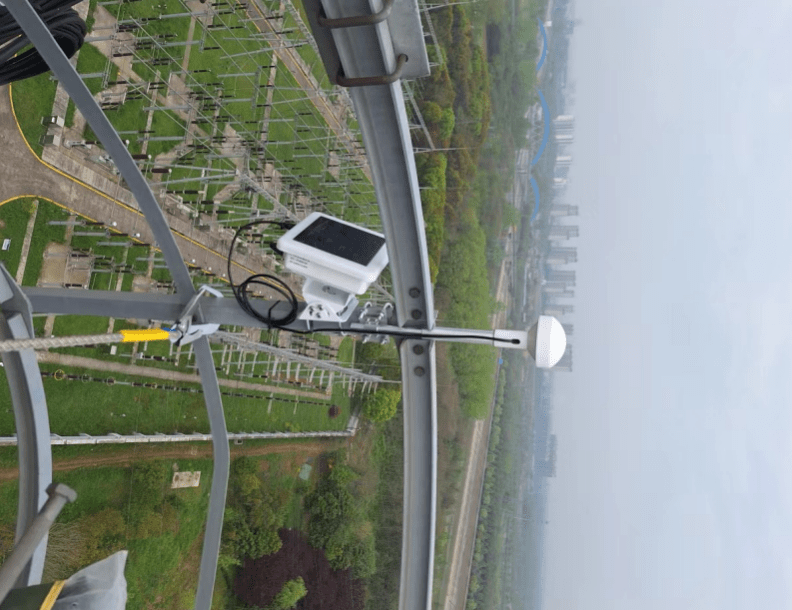
The TruGem Beidou High-Precision Tower Monitoring Solution exemplifies the next generation of intelligent tower monitoring.
Each terminal integrates Beidou RTK high-precision positioning (centimeter-level), a six-axis gyroscope, 4G or LoRa wireless communication, and solar-powered operation.
It can also connect to various sensors—such as microclimate modules, water immersion detectors, and temperature-humidity sensors—to provide a multi-dimensional view of structural and environmental conditions.
The solution leverages both Beidou (BDS) and GPS with RTK differential technology, allowing it to detect horizontal/vertical displacement, foundation settlement, and tower tilt in real time.
Collected data is transmitted to a cloud monitoring platform that performs real-time analysis, historical trend visualization, and early-warning alarms when thresholds are exceeded.
Solution Benefits: Why It’s Worth the Investment
The TruGem Beidou High-Precision Tower Monitoring solution delivers measurable value across four key dimensions:
- Safety Benefits: Real-time early warnings enable operators to identify hidden risks and prevent tower collapses or power outages.
- Operational Efficiency: Automation reduces the need for manual inspections, minimizing human exposure and improving worker safety.
- Economic Returns: Predictive maintenance extends asset life, prevents costly outages, and optimizes maintenance scheduling.
- Compliance and Reputation: Digital records and auditable logs enhance trust, transparency, and regulatory alignment.
In essence, TruGem’s Beidou-based Smart Tower Monitoring Solution transforms traditional passive management into active, data-driven intelligence, ensuring that every structural change is monitored, analyzed, and addressed in real time.
Conclusion
Traditional tower monitoring methods—characterized by manual, periodic, and reactive approaches—are no longer viable in an age defined by climate uncertainty, urban complexity, and digital transformation.
As infrastructure evolves, so must its monitoring. By embracing online sensing, reliable communication, edge intelligence, and AI-driven analytics, operators can shift from reactive maintenance to proactive, predictive asset management.
Solutions like TruGem’s Beidou High-Precision Monitoring system demonstrate that the future of Smart Tower Monitoring lies in continuous connectivity, intelligent analysis, and predictive foresight—a future where data ensures not only operational efficiency but also the safety and resilience of our critical infrastructure.